Snow can damage garden furniture if it is not prepared and protected. The type of material, the amount of snow and the length of time it sits on the furniture all play a part. The good news is that with some simple maintenance and sensible winter storage, you can keep your furniture looking smart for many years.
At BE Furniture Sales, we supply commercial garden and bistro furniture to venues across the UK. The same strength, durability and easy care that cafés and pubs rely on make our furniture ideal for home and garden use, even through a British winter.
Snow and Garden Furniture
When snow lands on garden furniture, it not only sits on the surface. As temperatures rise and fall, snow melts and refreezes. This creates a cycle that can slowly damage materials.
Typical problems include:
- Moisture soaking into wood and fabrics
- Freeze and thaw cycles cause materials to expand and contract
- Rust forming on exposed metal areas
- Plastic becoming brittle and cracking
- Dirt and debris trapped under snow, leaving marks or stains
Left unchecked, these issues lead to faded finishes, cracks, rust patches, wobbly joints and in time, furniture that becomes uncomfortable or unsafe to use. It is far easier and cheaper to protect and maintain what you already own than replace furniture sets every few years.
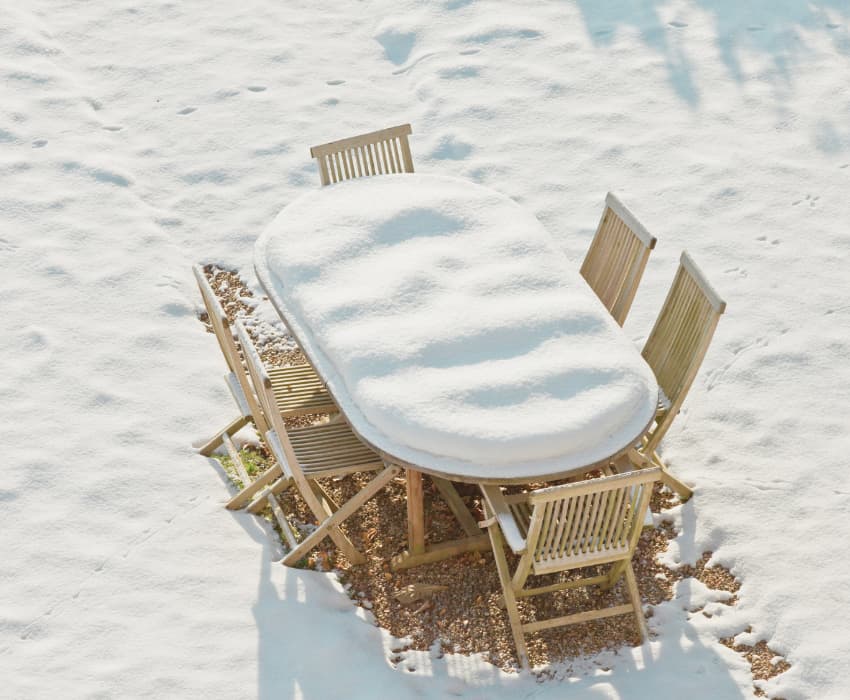
Wooden Garden Furniture In Snow
- Softwood Furniture
Softwoods such as pine, cedar, fir and spruce are often used for more affordable garden sets. Softwood can look attractive, but its more open grain makes it more vulnerable to moisture.
In cold, dry weather before snowfall, tiny cracks can appear in the timber. Once snow arrives, meltwater seeps into these cracks. When temperatures drop overnight, the water freezes, expands and pushes the cracks wider. As this cycle repeats, the timber can split, warp and eventually begin to rot.
Common problems with softwood furniture left out in the snow include:
- Splits along the grain
- Twisted or warped slats and arms
- Loose fixings and wobbly frames
- Green staining and early rot at the feet
Softwood sets are best moved into storage for the winter wherever possible.
- Hardwood Furniture
Hardwoods such as teak, oak, elm, eucalyptus, and mahogany are naturally denser and have a tighter grain. Many also contain natural oils that help to repel water. This makes hardwood garden furniture more resilient in damp and cold conditions.
Teak is a popular choice because it is strong, stable and rich in natural oils. Quality teak furniture is less likely to warp or crack, even when temperatures change quickly. That said, hardwood is not indestructible. If moisture is allowed to sit on the surface for long periods, even teak can mark and weather more than you might like.
Simple steps to protect hardwood furniture include:
- Washing down surfaces in autumn to remove dirt and algae
- Allowing the wood to dry fully
- Applying a suitable oil, stain or sealant to help repel water
- Placing furniture in a more sheltered spot, if it will remain outside
With a bit of care, wooden garden furniture can be left outside more safely than softwood, though some form of protection is still recommended.
Plastic and Rattan Furniture in Snowy Conditions
- Plastic Furniture
Plastic garden furniture is light, affordable and easy to clean. It is often tempting to leave it in place all year. However, cold weather can take its toll.
Plastic becomes more brittle as temperatures fall. If there are already small cracks or stress points, snow and ice can make them worse. Meltwater seeps into tiny gaps, then expands as it freezes, widening the crack. Over time, this can cause legs or arms to fail unexpectedly.
Long-term exposure can also lead to:
- Fading and chalky surfaces from UV light
- Staining from fallen leaves and debris trapped under snow
- Weakness around joints and fixings
The best approach is to move plastic furniture into a shed, a garage, or a storage box at the end of autumn. If this is not possible, use good breathable covers and avoid sitting on the furniture in very cold conditions.
- Rattan and Rattan Effect Furniture
Natural rattan is beautiful, but it does not enjoy a damp British winter. Genuine rattan fibres absorb water, swell and quickly deteriorate in rain, frost and snow. For this reason, real rattan furniture is best treated as indoor or occasional-use furniture in the UK.
Most “rattan” furniture sold for gardens today is rattan effect. This is usually made with woven synthetic strands over a metal frame. Good-quality rattan-effect furniture is far more weather-resistant and can withstand showers and occasional light snow.
Even so, prolonged snow cover and standing water can:
- Stress the woven strands
- Cause mould and mildew in the weave
- Encourage rust on the underlying frame if coatings are damaged
Rattan effect furniture is best cleaned in autumn, dried thoroughly, and stored under cover or protected with fitted, breathable covers during winter.
Metal Garden Furniture and Snow Exposure
- Steel and Wrought Iron Furniture
Steel and wrought iron furniture are known for their strength and traditional style. When the protective paint or powder coating is intact, these materials perform well outdoors. The problem comes once that barrier is damaged.
Snow that melts and refreezes on bare metal speeds up rust. Water finds its way into joints, rivets and decorative scrolls, then sits there. Rust can lead to:
- Bubbling and flaking paint
- Rough or sharp patches where rust breaks through
- Weakening of thin sections or hollow tubes
Before winter arrives, check your metal garden furniture carefully. Look for chips in the finish, rust spots or joints that feel a little loose. Treating these areas in autumn is much easier than tackling heavy rust in spring.
- Aluminium and Stainless Furniture
Aluminium furniture is one of the most winter-friendly options. Aluminium does not rust in the same way as steel and is naturally corrosion-resistant. It is also light enough to move easily into storage when needed.
Stainless steel is another strong choice, especially for modern dining sets and frames. It resists rust and staining very well. The main areas to watch are:
- Joints and fixings where different metals meet
- Small scratches that could collect salt or grime
- Any steel bolts used with aluminium or stainless steel frames
Both aluminium and stainless steel furniture from reputable suppliers are designed to cope with British weather, including snow, with only modest maintenance.
Commercial Furniture from BE Furniture Sales
At BE Furniture Sales, we supply commercial outdoor furniture to busy cafés, pubs, hotels and event venues. These pieces are built for daily use in all kinds of conditions.
For home gardens, this means:
- Strong frames designed to cope with frequent movement
- Finishes chosen for outdoor durability
- Easy to clean surfaces that respond well to simple maintenance
When combined with sensible winter storage and protective covers, commercial metal furniture offers excellent long-term value.
Winter Storage for Garden Furniture
- Bringing Furniture Indoors Or Under Cover
The best way to protect your garden furniture from snow is to bring it under cover. Ideal locations include:
- Garages and sheds
- Garden rooms or summerhouses
- Covered terraces or lean-to structures
Before moving furniture, clean it with mild soap and water, rinse, and allow it to dry thoroughly. Stack chairs carefully and avoid trapping moisture between surfaces. Leave a little space around each piece to allow air to circulate and reduce the risk of mould.
- Leaving Furniture Outside
In many gardens, storage space is limited. If you must leave some or all of your furniture outdoors:
- Choose the most sheltered area, away from prevailing winds
- Keep furniture off bare soil where feet can sit in standing water
- Avoid placing directly under trees that drop leaves and sap
- Use breathable, well-fitting winter covers rather than improvised tarpaulins
Covers designed for garden furniture usually include vents that encourage airflow. This helps moisture escape and reduces condensation.
Protecting Garden Furniture Before Snow Arrives
A little time in autumn can save a lot of repair work in spring. A simple routine might include:
- Wash furniture with warm water and a mild detergent
- Rinse and leave to dry completely
- Check for cracks, loose joints or any signs of rust
- Tighten fixings and make minor repairs
- Apply protective oils, stains or sprays where needed
- Decide which items will be stored under cover and which will stay outside
Protective Treatments For Different Materials
Wood
Use products that are suitable for the specific timber. Options include:
- Teak oil and hardwood oils for dense timbers
- Exterior wood stains that add colour and protection
- Clear sealants that help repel water while keeping a natural look
Always follow the manufacturer’s instructions and apply treatments in dry weather.
Metal
For steel and wrought iron:
- Remove light rust with a mild abrasive pad or fine wet and dry paper
- Treat exposed metal with a rust converter or metal primer
- Finish with an outdoor metal paint or touch up to match the original colour
For aluminium and stainless steel, regular cleaning is usually enough. Clear protective sprays can be used on vulnerable areas if desired.
Plastic and Rattan Effect
Use gentle cleaners rather than harsh chemicals. A soft brush and soapy water will lift most dirt. For the rattan effect, pay attention to the weave to remove trapped debris. Some products offer UV protection for synthetic materials, which can be helpful if furniture is in a very sunny spot for the rest of the year.
Soft Furnishings
Cushions, parasols and outdoor textiles should never be left outside through a British winter. Even fabrics labelled as outdoor-safe will look far better for longer if stored indoors.
Before storing:
- Brush off loose dirt
- Spot clean or wash covers according to the care label
- Allow everything to dry completely
- Store in dry, ventilated boxes or bags rather than sealed plastic sacks
This prevents musty smells and mildew, keeping your cushions fresh and ready when spring arrives.
During Winter Weather
Small habits during cold snaps help reduce the risk of damage.
- Brush fresh snow off tabletops and chair seats rather than letting it pile up
- Avoid dragging frozen furniture across patios, which can stress joints and scratch finishes
- Check covers after strong winds and adjust straps or ties if they have shifted
- After a spell of freezing weather, do a quick walk around to spot any new cracks, rust patches or loose fixings
These quick checks make it easier to deal with small issues before they become serious problems.
Choosing Garden Furniture That Copes With Snow
If you live in an area that regularly sees frost and occasional snow, it makes sense to choose garden furniture with winter in mind.
Useful features include:
- Strong frames with quality welds and fixings
- Weather-resistant finishes that are easy to clean
- Materials that handle moisture and temperature changes well
Hardwood, aluminium and stainless steel are wise long-term choices, especially when combined with good covers and storage. Quality rattan on metal frames can also perform well when properly cared for.
BE Furniture Sales offers a wide range of garden and bistro sets selected for durability, easy maintenance and attractive styling. Many of our metal and aluminium pieces are designed to commercial standards, which gives extra confidence when facing unpredictable British weather.
Your Winter Plan
Snow can damage garden furniture, but most problems are avoidable with a bit of planning. The points to remember are:
- Start preparations in autumn rather than waiting for the first frost
- Clean, inspect and protect furniture before winter arrives
- Store items under cover wherever possible
- Use breathable covers for any furniture that must stay outside
- Bring cushions and soft furnishings indoors
With these habits in place, you can enjoy your garden furniture season after season and protect your investment, whether your set is wooden, metal, plastic, rattan effect or a mix. If you are ready to upgrade to more winter-friendly options, BE Furniture Sales offers durable, commercial furniture that looks at home on any British patio or terrace.
FAQs
Q: Can garden furniture be left outside in the snow if it is covered?
Yes, many sets can be left outside if they are properly covered with breathable, well-fitting furniture covers. The furniture should be clean and dry before covering and placed in as sheltered a position as possible.
Q: Is teak garden furniture safe to leave out all winter?
Quality teak is naturally resilient and can usually withstand outdoor conditions year-round. It will still benefit from regular cleaning and occasional oiling or sealing. Covers and a sheltered position will help it look its best for longer.
Q: Does aluminium garden furniture rust in British winters?
Aluminium does not rust in the same way as steel and is very resistant to corrosion. This makes it an excellent choice for low-maintenance garden furniture in the UK, especially when combined with sensible winter care.
Q: Should plastic garden furniture be stored indoors during cold snaps?
Plastic furniture is more likely to become brittle in icy weather. Storing it in a shed, garage or under cover during winter will reduce the risk of cracks and extend its life.
Q: What is the best way to store garden furniture cushions over winter?
Clean cushions according to the care instructions, allow them to dry thoroughly, then store them in a dry indoor space. Use ventilated storage boxes or fabric bags and keep them off damp floors to prevent mould and musty smells.
Related Articles
- Year Round Garden Furniture
- Repairing and Salvaging Water Damaged Wooden Furniture
- Get Your Garden Furniture Ready for Autumn
- Restoring Metal Garden Furniture
- Protect, Store and Maintain Wooden Garden Furniture
Prefer an AI Summary?