Commercial tables are built to withstand the demands of hospitality environments, from cafés and restaurants to hotels, pubs and event venues. Daily service, constant cleaning and regular customer use will eventually leave visible signs of wear across tabletops and frames. Scratches caused by crockery, cutlery, cleaning equipment and furniture movement are particularly common in high-traffic commercial settings.
Although surface damage is inevitable over time, many scratches and marks can be repaired or minimised with proper maintenance. Proper furniture care not only improves appearance but also helps extend the lifespan of commercial tables.
Commercial Table Materials
Commercial tables are manufactured using a range of materials, each offering different advantages in busy hospitality environments.
- Wooden Tables
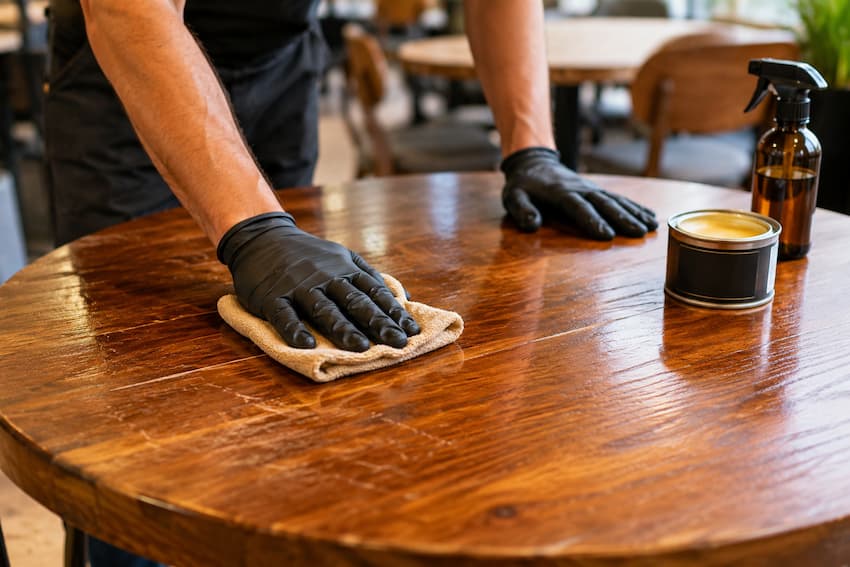
Wood remains one of the most popular choices for cafés, pubs and restaurants due to its warmth, versatility and traditional appearance. Solid wood and veneered tabletops perform well in commercial spaces, although regular use will eventually lead to scratches, fading and general surface wear.
Most commercial wooden tables include protective lacquers, oils or sealants designed to improve resistance against spills, staining and daily cleaning. Over time, these finishes naturally begin to wear in heavily used areas.
- Metal Tables
Metal tables are frequently used in modern hospitality interiors and outdoor dining areas due to their strength and low maintenance requirements. They are highly durable and suitable for heavy commercial use, although scratches, scuffs, and dents can still develop during stacking, movement, and regular service.
Many metal commercial tables feature powder-coated finishes for additional durability and weather resistance.
- Glass Tables
Glass tables provide a contemporary appearance suited to reception spaces, lounges and modern dining environments. Toughened commercial glass is designed for strength and safety, though scratches can still occur when abrasive materials or debris are dragged across its surface.
Routine cleaning with suitable glass products helps preserve clarity and minimise visible surface marking.
Causes of Table Scratches
Commercial tables experience significantly more wear than domestic furniture due to constant daily use. Some of the most common causes of scratches include:
- Dragging plates, trays and cutlery across surfaces
- Chairs making contact with table edges
- Abrasive cleaning cloths or scouring pads
- Incorrect stacking or storage
- Outdoor dirt and grit
- Frequent layout changes within venues
Busy hospitality settings place continual pressure on furniture finishes, particularly during peak trading periods.
Commercial Vs Domestic Tables
Commercial furniture is specifically manufactured for demanding public environments. Restaurant, café and hospitality tables are designed to withstand repeated cleaning, constant movement and heavier daily use.
Commercial tables often feature:
- Reinforced frames and fixings
- More durable surface finishes
- Stronger protective coatings
- Thicker tabletop construction
- Materials suitable for regular sanitising
Domestic furniture may appear similar at first, but lighter construction and softer finishes often deteriorate more quickly in commercial environments. Strong cleaning chemicals commonly used in hospitality venues can also damage domestic furniture surfaces much faster.
Repairing Wooden Table Scratches
Wooden commercial tables can often be restored successfully using relatively straightforward repair methods.
- Light Surface Marks
Fine surface scratches can often be reduced by carefully sanding the affected area with fine-grade sandpaper. Once blended, furniture oil or polish can be applied to restore consistency across the finish.
- Polish and Oils
Small scratches may be improved using furniture polish or coloured wood oils. Applying a small amount with a soft cloth helps blend minor marks into the surrounding surface.
- Wood Fillers
Deeper scratches and gouges may require wood filler before refinishing. Once dry, the repaired section should be lightly sanded to a smooth finish.
- Stain Markers
Wood stain markers are particularly useful for darker finishes and visible edge scratches. Matching the stain colour correctly helps maintain a more uniform appearance across the tabletop.
Repairing Metal Table Scratches
Metal commercial tables benefit from routine maintenance to preserve both appearance and protective finishes.
- Cleaning The Surface
Before attempting any repairs, clean the affected area using mild soap, warm water and a soft cloth. Removing surface dirt helps prevent additional scratching during polishing.
- Metal Polish
A suitable metal polish can reduce the appearance of light scratches while restoring shine to the surface. Polish should be applied carefully using a soft cloth to avoid further marking.
- Protective Maintenance
Outdoor metal tables benefit from regular cleaning and inspection, particularly in exposed or coastal environments. Keeping surfaces dry and free of debris helps reduce corrosion and prolong the finish’s durability.
Repairing Glass Table Scratches
Glass surfaces require careful treatment to prevent visible marks from worsening.
- Cleaning Before Repair
Glass should always be cleaned thoroughly before attempting repairs. Dust and grit left on the surface can create additional scratches during polishing.
- Glass Polishing Compounds
Specialist glass-polishing compounds can improve the appearance of light scratches. Deeper marks may require several applications for noticeable improvement.
- Surface Protection
Applying a protective coating to repaired areas can help minimise further wear and improve surface protection.
Outdoor Table Care
Outdoor commercial furniture faces additional challenges from changing weather conditions throughout the year. Rain, direct sunlight, frost and airborne debris can gradually affect finishes and structural condition.
To help maintain outdoor tables:
- Clean surfaces regularly to remove moisture and dirt
- Cover tables during poor weather where possible
- Store furniture indoors during the winter months
- Inspect joints and fixings routinely
- Reapply protective finishes where required
Regular seasonal maintenance helps preserve the appearance and prolong the furniture’s lifespan.
Preventing Future Scratches
Preventive maintenance plays an important role in extending the appearance and durability of commercial tables.
- Table Protection
Coasters, placemats and protective pads help reduce scratches caused by crockery, cutlery and hot serving items. This is particularly beneficial for wooden and glass tabletops.
- Suitable Cleaning Products
Aggressive chemicals and abrasive cleaning tools can gradually wear away protective finishes. Commercial venues should use cleaning products suitable for hospitality furniture surfaces.
Avoid using:
- Wire wool or abrasive scourers
- Bleach heavy cleaning sprays
- Harsh solvent based products
- Rough cleaning cloths
Microfibre cloths and gentle commercial cleaning solutions are generally the safest option for ongoing furniture care.
- Daily Maintenance Habits
Simple maintenance routines can significantly reduce furniture wear.
Recommended practices include:
- Lifting tables instead of dragging them
- Rotating tables within busy seating areas
- Inspecting fixings regularly
- Cleaning spills promptly
- Training staff on correct furniture handling
Small preventative measures often help reduce repair costs.
- Protective Sealants
Protective sealants and finishing oils help guard against moisture, staining, and surface damage, particularly on commercial wooden tables.
Repair Or Replacement
Many cosmetic scratches can be repaired effectively, although certain types of damage may indicate replacement is the better solution.
Signs include:
- Structural instability
- Severe water damage
- Rust affecting frame integrity
- Large cracks or splits
- Swollen tabletops
- Damaged joints or supports
Replacing heavily damaged tables can improve both safety and presentation within commercial environments.
Sustainable Furniture Maintenance
Maintaining and repairing commercial tables where possible can help reduce unnecessary waste and replacement costs. Proper care extends the lifespan of furniture and allows businesses to gain greater value from their furniture investment.
Commercial Furniture From BE Furniture Sales
At BE Furniture Sales, we supply commercial furniture designed for demanding hospitality and event environments. Our range includes café tables, restaurant furniture, outdoor dining sets and heavy-duty event furniture suitable for commercial use.
From wooden dining tables to aluminium outdoor furniture, our products are selected for durability, practicality and professional presentation across busy commercial settings.
Related Articles
- Maintenance Tips for Restaurant & Cafe Furniture
- Stop Spraying Sanitiser on Wooden Restaurant Tables
- Maintenance Tips for Outdoor Aluminium Furniture
- Commercial Restaurant & Cafe Furniture Design Guide
- Maintenance Tips for Outdoor Teak Furniture
Prefer an AI Summary?