Outdoor seating can provide valuable additional capacity for cafés, pubs, restaurants, hotels and other hospitality venues. A terrace, courtyard or beer garden gives customers another place to dine, drink and socialise while helping a business make better use of its available space.
Choosing suitable furniture involves more than finding a design that looks attractive. Commercial buyers also need to consider durability, comfort, cleaning, storage, weather exposure and the amount of daily use each item will receive.
This commercial outdoor furniture buying guide covers the main decisions involved, from planning the layout and comparing materials to choosing suitable chairs, tables and complete furniture sets.
BE Furniture Sales supplies a varied range of commercial outdoor furniture for hospitality venues, event spaces, leisure businesses and domestic gardens throughout the UK.
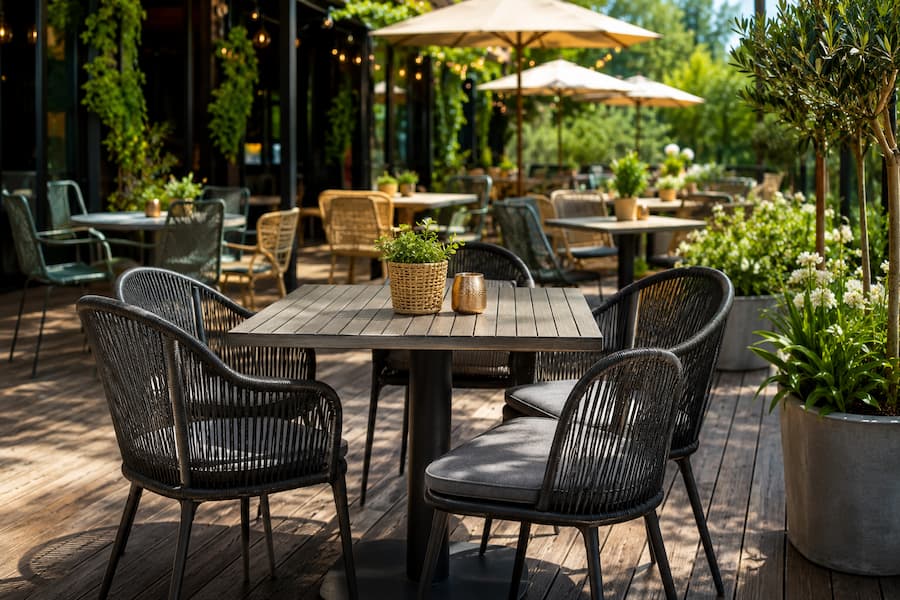
Planning Your Outdoor Seating Area
The available space should be assessed before individual furniture styles are selected. This allows you to establish the number of tables and chairs that can be accommodated without making the area feel cramped or difficult to navigate.
Consider the routes used by customers and staff, particularly between doorways, tables and serving areas. Waiting staff need sufficient room to carry plates and drinks safely, while customers should be able to reach their seats without repeatedly asking other diners to move.
Access routes should remain clear and the layout should accommodate pushchairs, mobility aids and wheelchairs wherever possible. Fire exits, gates and emergency access points must never be blocked by furniture.
It is also worth observing the direction of sunlight, wind and rain. An exposed pavement terrace may require heavier furniture than a sheltered courtyard. Tables positioned beneath trees may need more frequent cleaning, while seating close to outdoor heaters will require careful spacing.
For pubs and hospitality businesses developing a larger outdoor area, our beer garden design ideas and tips provide further practical guidance on creating a welcoming and usable space.
Furniture For Different Venues
Commercial outdoor furniture should suit the way customers use the venue. A compact coffee shop terrace has different requirements from a hotel courtyard or a busy pub garden.
Cafés and Coffee Shops
Smaller square or round tables work well outside cafés because they can seat two customers comfortably without taking up excessive space. Several tables can also be moved together when a larger group arrives.
Stacking chairs are particularly useful where furniture needs to be brought indoors at the end of the day. Lightweight aluminium and commercial plastic chairs can make this process quicker for staff.
The overall design should complement the café interior and shopfront. Consistent furniture can help the outdoor seating feel like a natural extension of the business rather than a temporary addition.
Restaurants and Bistros
Restaurant furniture may need to support longer dining periods, making chair comfort especially important. Seat shape, back support, table height and legroom should all be assessed before a larger order is placed.
The table size should reflect the style of service. Compact tables can suit drinks, light meals and casual dining, while larger table tops may be needed for shared dishes, side plates, wine bottles and table accessories.
A coordinated selection of chairs and tables can help a restaurant terrace maintain a smart and professional appearance throughout the season.
Pubs and Beer Gardens
Pub furniture usually needs to withstand frequent movement, food and drink spillages and high levels of daily use. Easy cleaning, stability and robust construction are therefore important priorities.
Larger tables can accommodate groups, although a mixture of two-seat and four-seat arrangements provides greater flexibility. Furniture that can be rearranged easily also helps a venue respond to changes in customer numbers throughout the day.
Our guide to maximising a pub beer garden covers additional ways to improve seating capacity and make better use of the available area.
Hotels and Leisure Venues
Hotels may require several types of outdoor furniture across one site. Dining terraces, pool areas, bedroom balconies and entrance courtyards can each have different practical and visual requirements.
Comfort and presentation tend to be especially important in hotel settings, although the furniture must still be easy for staff to clean and reposition. Coordinated sets can help create a consistent appearance across multiple outdoor areas.
Schools And Community Venues
Outdoor furniture used by schools, village halls, sports clubs and community centres should be durable, straightforward to maintain and easy to store.
Plastic, aluminium and steel designs can be practical choices for spaces used by different groups. Stackable chairs and tables that can be moved without specialist equipment are particularly useful where the layout changes regularly.
Outdoor Furniture Materials Compared
Every material has its own advantages. The right option will depend on the appearance you want, the level of maintenance you can manage and the amount of exposure the furniture will receive.
The following table provides a general comparison.
| Material | Suitable Settings | Maintenance Level | Key Advantages | Points To Consider |
|---|---|---|---|---|
| Aluminium | Cafés, bistros, restaurants and pavement seating | Low | Lightweight, corrosion resistant and easy to move | Very lightweight pieces may need securing in exposed locations |
| Steel | Pub gardens, restaurants and busy terraces | Low to moderate | Strong, stable and available in contemporary designs | Protective finishes should be checked regularly for damage |
| Plastic | Cafés, schools, events and high volume venues | Very low | Affordable, easy to clean and often stackable | Choose commercial quality designs with suitable UV resistance |
| Polywood | Restaurants, hotels, gardens and coastal settings | Low | Timber style appearance with straightforward maintenance | Usually heavier than basic plastic furniture |
| Rattan Style | Hotels, lounges, cafés and covered terraces | Low to moderate | Comfortable appearance and a relaxed contemporary style | Cushions may need separate dry storage |
| Wood | Pub gardens, rustic venues and traditional settings | Moderate to high | Natural appearance, solid construction and timeless style | May require cleaning, drying and periodic treatment |
Aluminium Furniture
Aluminium is a popular material for cafés, bistros and hospitality terraces because it is relatively light, resistant to corrosion and easy for staff to move.
Many aluminium chairs can be stacked, helping businesses clear terraces quickly or reduce the amount of storage space required. Aluminium table tops are also easy to wipe down between customers.
The material works particularly well where furniture needs to be moved in and out each day. It is also suitable for pop-up areas, event spaces and venues that frequently change their layout.
Very lightweight furniture should be considered carefully in exposed areas where strong winds are possible. A heavier table base or sheltered position may be more appropriate in these settings.
Our article discussing whether aluminium is the best metal for garden furniture provides a closer look at its practical advantages.
Steel Furniture
Steel offers strength and stability, making it suitable for busy outdoor dining areas. It is commonly used for table frames, chair frames and complete garden furniture sets.
Powder-coated finishes can provide an attractive surface while helping to protect the underlying metal. The coating should still be checked periodically, particularly around joints, feet and areas that may be knocked during movement or storage.
Steel furniture is generally heavier than aluminium, which can be useful on exposed terraces. However, staff should still be able to move each item safely whenever the area needs to be cleaned or rearranged.
Plastic Furniture
Commercial plastic furniture provides an affordable and practical choice for businesses that need easy cleaning and simple storage.
Plastic chairs are available in a wide range of colours and styles, from traditional garden designs to contemporary moulded seating. Several models can be used indoors as well as outdoors, giving venues more flexibility throughout the year.
A smooth plastic surface can usually be cleaned with warm water and a mild detergent. This makes the material useful for cafés, schools, holiday parks, event venues and other high-traffic settings.
Quality is important. Furniture intended for commercial use should be sturdy, stable and appropriate for repeated use. UV-resistant materials can also help reduce fading and deterioration caused by prolonged sunlight.
Polywood Furniture
Polywood offers the appearance of timber while requiring less routine treatment. It is often combined with aluminium frames to create outdoor chairs, tables and complete dining sets.
The surface is generally easy to wipe clean and does not need the same oils or preservatives associated with natural wood. It can therefore be a useful choice for hospitality venues seeking a warmer appearance without adding extensive seasonal maintenance.
Polywood furniture can suit contemporary pub gardens, restaurant terraces, hotel courtyards and coastal locations. Its weight can also provide a stable feel in exposed areas.
Rattan Style Furniture
Synthetic rattan style furniture creates a relaxed and comfortable appearance. It is particularly popular in hotel courtyards, outdoor lounges, conservatories and informal dining areas.
The woven design can be paired with glass-topped tables and upholstered cushions to create a complete seating arrangement. Darker colours are often chosen for commercial settings because they complement a wide range of surroundings and can be easier to coordinate.
Cushions should be stored in a clean and dry location when not in use unless they are specifically designed for continuous outdoor exposure. Food, drink and dirt should also be removed from the woven surface before they become embedded.
Further advice is available in our rattan garden furniture maintenance tips and our guide covering the popularity of rattan outdoor furniture.
Wooden Furniture
Wooden outdoor furniture offers a traditional and natural appearance that works especially well in pub gardens, rural hotels, farm shop cafés and rustic hospitality venues.
Different timbers have different maintenance requirements, so buyers should check the care instructions supplied with each product. Outdoor wood may need to be cleaned, dried and treated periodically to help preserve its appearance.
Wooden furniture should not remain in standing water or be stored while damp. Feet, joints and table tops should be inspected regularly for signs of wear.
Our guide to protecting, storing and maintaining wooden garden furniture provides more detailed seasonal advice. Guidance is also available on removing green algae from garden furniture.
Durability In Commercial Settings
Furniture used by a business will usually experience more intensive use than furniture placed in a private garden. Chairs may be moved dozens of times each day, tables may be cleaned repeatedly, and surfaces may be exposed to food, drink, sunlight and rain.
A low purchase price does not always represent the best value. Furniture that becomes unstable, difficult to clean or visually tired after a short period may need to be replaced sooner than expected.
Look carefully at joints, frames, feet and table bases. Chairs should sit evenly on a level surface without rocking. Tables should remain stable when customers rest their arms on the edge or place items on the top.
The anticipated customer base should also be considered. Venues catering for families, large groups or frequent events may need particularly robust designs.
Commercial buyers placing a larger order may find it useful to purchase a small quantity first, allowing the furniture to be assessed within the intended space before the full layout is completed.
Customer Comfort
Comfort can influence the amount of time customers spend within an outdoor area. This is particularly relevant for restaurants, hotels and cafés where guests may remain seated for an extended meal or several rounds of drinks.
The shape of the backrest, the depth of the seat and the height of the table should work together. A visually attractive chair may still be unsuitable if the seat is too narrow or the table does not provide sufficient legroom.
Armchairs can provide additional support, although they usually require more space than armless designs. Armless chairs can often be positioned closer together and may be easier to stack.
Cushions can improve comfort but introduce additional cleaning and storage requirements. A business should establish where cushions will be stored overnight and during wet weather before adding them to the seating area.
Weather Exposure
Furniture described as suitable for outdoor use should still be cared for correctly. No material benefits from unnecessary exposure to prolonged rain, frost, standing water or harsh winter conditions.
UV light can fade colours and affect some surfaces over time. Rain can collect inside hollow frames or around joints, while frost can worsen existing cracks and surface damage.
Whenever possible, outdoor furniture should be stored in a dry and ventilated location during prolonged periods of poor weather. Where indoor storage is limited, protective covers may help, provided they fit correctly and allow sufficient airflow.
Furniture covers should not be placed over items that are already wet or dirty. Trapped moisture can encourage staining, algae and mould.
Cleaning and Maintenance
A simple maintenance routine can help furniture remain presentable and reduce the likelihood of minor issues becoming more serious.
Tables should be wiped between customers using products suitable for the surface. Chairs should be checked for food, drink, leaves and bird mess before the seating area opens.
A more thorough clean should be completed regularly, including chair backs, feet, table legs and the underside of table tops. Dirt tends to accumulate around joints and textured surfaces so that these areas may require a soft brush.
Furniture should also be inspected for loose fixings, damaged feet, sharp edges, cracked surfaces or unstable frames. Any unsafe item should be removed from use until it has been repaired or replaced.
Our maintenance tips for restaurant and café furniture provide additional advice for busy hospitality settings.
Storage and Stacking
Storage is often overlooked until the furniture arrives. A venue may have sufficient room for twenty tables on its terrace but only enough indoor storage for half of them.
Stacking chairs can significantly reduce the footprint required. Buyers should check the recommended stack height and avoid stacking more chairs than the manufacturer advises.
Tables with folding tops or folding frames can also make better use of restricted storage areas. Removable table tops and separate bases may be useful for some commercial settings, although assembly and storage procedures should remain practical for staff.
Storage rooms should be clean, dry and accessible. Furniture should not block electrical equipment, fire exits or stock that staff need to reach regularly.
Staff should also be shown the correct way to lift, stack and move each item. Dragging furniture across paving can damage chair feet, frames and outdoor surfaces.
Safety and Stability
Commercial outdoor furniture must remain stable during normal use. Uneven paving, cobbles, decking and sloping terraces can all affect the way chairs and tables sit.
Adjustable feet can help on slightly uneven surfaces, although they should not be used to compensate for a dangerously unstable area. Damaged paving and significant changes in level should be addressed separately.
Table bases should be appropriate for the size and weight of the table top. A base that is too small may allow the table to tip when weight is placed near the edge.
Wind exposure should also be considered. Lightweight tables, parasols and covers can become hazardous during sudden gusts. Parasols should be used with an appropriate base and closed whenever conditions become unsafe.
Businesses using heaters near their outdoor seating should follow the manufacturer’s placement and clearance instructions. Our outdoor garden heating safety tips cover several points to consider.
Choosing Outdoor Chairs
Outdoor chairs are available in numerous materials, colours and shapes. The best choice will reflect the available space, the expected level of use and the amount of daily movement required.
Stacking chairs are a practical option for cafés, restaurants and event venues. They can be cleared quickly at the end of service and require less storage space than non-stacking alternatives.
Aluminium chairs are light and easy to handle, while steel chairs can provide additional weight and stability. Plastic chairs offer straightforward cleaning and a broad choice of contemporary styles. Rattan-style chairs can create a more relaxed appearance for hotel terraces and lounge areas.
Armchairs provide additional comfort but occupy more floor space. Armless chairs may be more suitable for compact terraces where every seat needs to be used efficiently.
The seat and frame dimensions should be checked carefully. It is also worth considering whether replacement chairs can be purchased later if the business plans to expand the outdoor area.
-

Aluminium Stacking Chair
£21.00 excl. VAT -
Sale!
Ash Aluminium Stacking Chair
Original price was: £39.00.£32.00Current price is: £32.00. excl. VAT -
Rattan Garden Armchair
£48.00 excl. VAT -
Sale!
Rattan Garden Rope Chairs – Grey
Original price was: £28.00.£20.00Current price is: £20.00. excl. VAT -
Deluxe Garden Stacking Chairs – Dark Wood Finish
£45.00 excl. VAT -
Deluxe Stacking Garden Chairs – Light Wood Finish
£45.00 excl. VAT
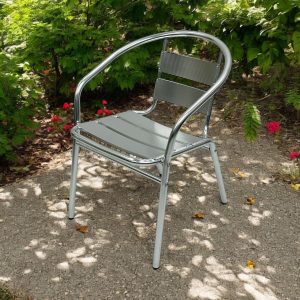
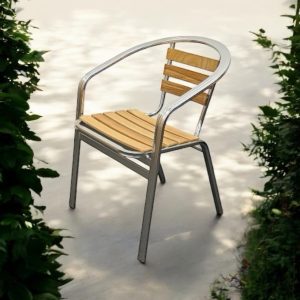
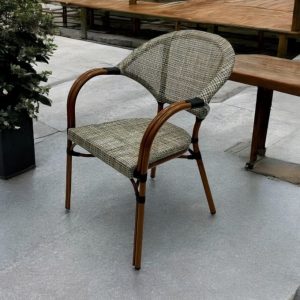
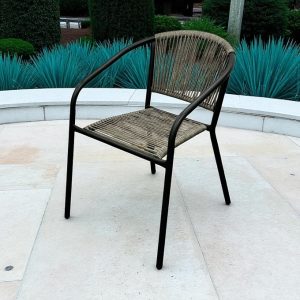
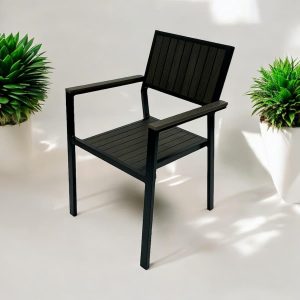
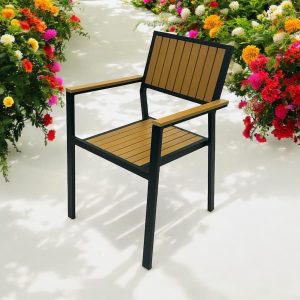
View the full range of commercial outdoor chairs.
Choosing Outdoor Tables
The shape and size of a table can have a significant effect on the flexibility of the seating area.
Small square tables are useful for two customers and can often be combined to accommodate four or six. Round tables encourage a more social seating arrangement and avoid sharp corners in compact spaces.
Rectangular tables provide more surface area for meals and larger groups, although they require additional room around each side.
The table top should be large enough for the intended service. A coffee and cake terrace requires less space than a restaurant serving full meals with plates, glasses, condiments and sharing dishes.
Table bases must provide sufficient stability without restricting customer legroom. Pedestal bases can make it easier to position chairs, while four-leg tables often provide a traditional appearance.
Slatted or perforated tops allow rainwater to drain more easily. Smooth tops can be quick to wipe down but may need to be tilted or dried after heavy rain.
-
Vienna Wooden High Table
£85.00 excl. VAT -
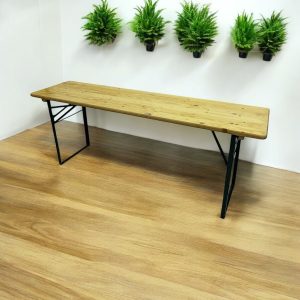
2 Metre Beer Tables
From £65.00 excl. VAT -

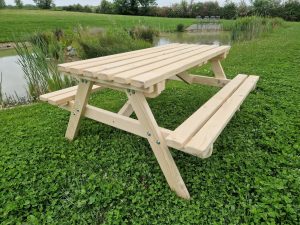
Wooden Picnic Benches – 6 Seater
£200.00 excl. VAT -
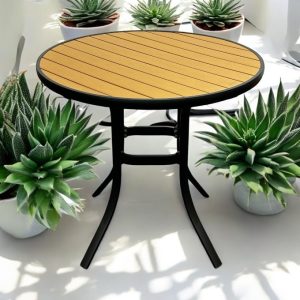
80cm Round Polywood Garden Dining Table
£75.00 excl. VAT -
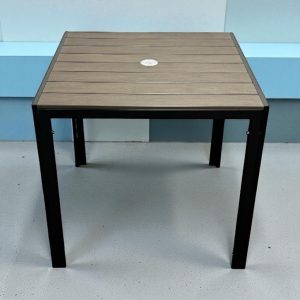
Durawood Outdoor Table – 80cm Square
£65.00 excl. VAT -
Aluminium Round Bolero Pedestal Table – Rolled Edge – 60cm
From £28 excl. VAT
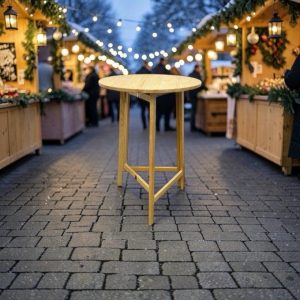
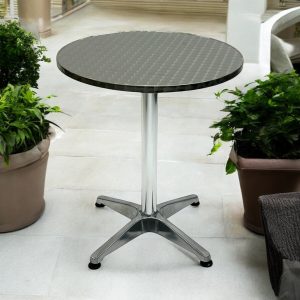
View the available commercial outdoor tables.
Choosing Complete Furniture Sets
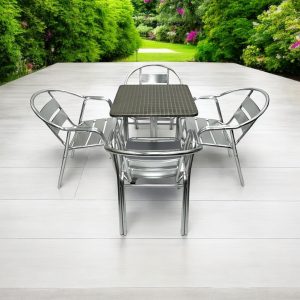
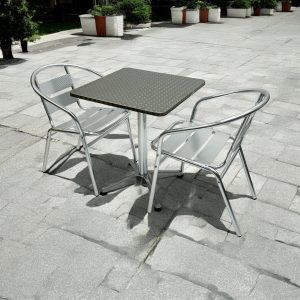
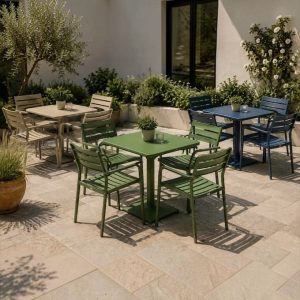
Complete outdoor furniture sets provide a convenient way to create a coordinated seating area. The chairs and table have already been selected to work together, reducing the time required to compare individual dimensions, materials and finishes.
Two chair sets are suited to balconies, small café terraces and restricted spaces. Four chair sets can accommodate families and groups while remaining manageable for most hospitality layouts.
A business can also combine different set sizes. Two-seat tables can be placed around the edge of a terrace, while larger sets occupy the centre or more spacious areas.
Sets can be particularly useful for hotels, cafés, pubs, holiday accommodation and garden centres seeking a consistent design across several seating zones.
Before ordering, check the total dimensions of the table and chairs in use rather than considering the table size alone. Customers need enough room to pull out a chair and move comfortably behind occupied seats.
-
Rattan Garden Set – Round Glass Table & 2 Rattan Chairs
£54.00 excl. VAT -
Sienna 3-Piece Folding Bistro Set – Various Colours
£60.00 excl. VAT -
Aluminium Cafe Set
£116.00 excl. VAT -
Garden Aluminium Bistro Set – Square Pedestal Table & 4 Double Tube Chairs
£140.00 excl. VAT -
Aluminium Bistro Set with Square Pedestal Table & 2 Chairs
£74.00 excl. VAT -
Solana Bistro Dining Sets – Various Colours
£240.00 excl. VAT
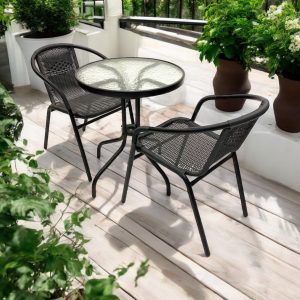
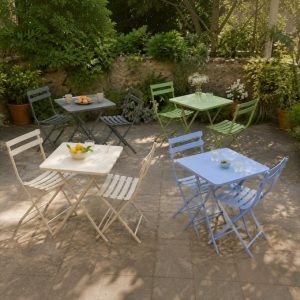
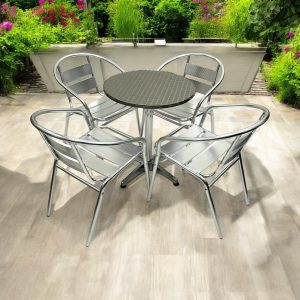
Browse the range of commercial outdoor furniture sets.
Balancing Cost and Value
The initial purchase price is only one part of the overall cost. Maintenance time, storage requirements, and replacement frequency should also be considered.
A very cheap chair may appear suitable initially but provide poor value if it needs regular repair or replacement. Equally, the most expensive furniture is not automatically the best choice for every venue.
Value comes from selecting furniture that fits the intended use. A seasonal café terrace may prioritise lightweight stacking chairs, while a busy pub garden may benefit from heavier tables and particularly robust frames.
Cleaning time also has a financial impact. Smooth, accessible surfaces allow staff to prepare an outdoor area more quickly, while complicated textures and removable cushions may require additional attention.
A consistent range can make future replacements easier. Buying a mixture of unrelated designs may create difficulties if one part of the seating area later needs to be expanded.
Measuring Before Ordering
Measurements should be taken before furniture is purchased. Record the total usable width and length of the area, then account for entrances, service routes, planters, heaters and other fixed features.
Allow for chairs to be occupied rather than pushed beneath the table. The working footprint of a dining set is considerably larger once customers are seated.
Temporary markers can be placed on the ground to represent the proposed tables and chairs. This provides a simple way to assess customer flow before the furniture arrives.
Doorways and storage access should also be measured. Large tables may fit comfortably on the terrace but prove difficult to move through a narrow entrance.
Where the furniture will be used on decking, gravel, grass or uneven paving, check that the feet and base design are suitable for the surface.
Buying Mistakes
One frequent mistake is choosing furniture entirely on appearance. A chair may suit the design of a venue but still be difficult to stack, uncomfortable for customers or unsuitable for the level of weather exposure.
Ordering too much furniture can also reduce the quality of the customer experience. Additional covers are only valuable if customers and staff can still move around the area safely.
Storage should not be left until the end of the buying process. Venues without sufficient storage may be forced to leave furniture outside throughout winter, potentially shortening its useful life.
Another issue is mixing tables and chairs without checking the dimensions. Seat height, arm height and table clearance should be compatible.
Buying domestic furniture for intensive commercial use may also create false savings. Furniture used in a busy hospitality environment needs to cope with regular movement, repeated cleaning and a broad range of customers.
Commercial Outdoor Furniture From BE Furniture Sales
BE Furniture Sales supplies outdoor chairs, tables and complete furniture sets for cafés, pubs, restaurants, hotels, schools, event venues, garden centres and domestic outdoor spaces throughout the UK.
The collection includes aluminium, steel, plastic, polywood and rattan-style furniture in a variety of traditional and contemporary designs. Options are available for compact pavement terraces, restaurant dining areas, hotel courtyards, beer gardens and larger commercial seating spaces.
Our furniture is selected with style, durability, storage and everyday usability in mind. Businesses can choose individual chairs and tables or purchase coordinated sets with either two or four seats.
Browse our complete range of commercial outdoor furniture to find suitable seating for your venue.
The product embed markers are positioned after the relevant buying guidance, allowing customers to move naturally from advice to available furniture.
Related Articles
- Refreshing a Cafe Without a Full Refit
- Commercial Outdoor Furniture in Black
- Commercial Outdoor Bistro Sets
- New Outdoor Commercial Chairs for 2026
- Plastic Café Furniture Sets For Everyday Commercial Use
Prefer an AI Summary?